Vegas' Neon Sign Graveyard: How Abandoned Relics Spark New Waves of Creative Reuse and Urban Exploration
Written by Tina Vogel · May 19, 2026
Vegas' Neon Sign Graveyard: How Abandoned Relics Spark New Waves of Creative Reuse and Urban Exploration
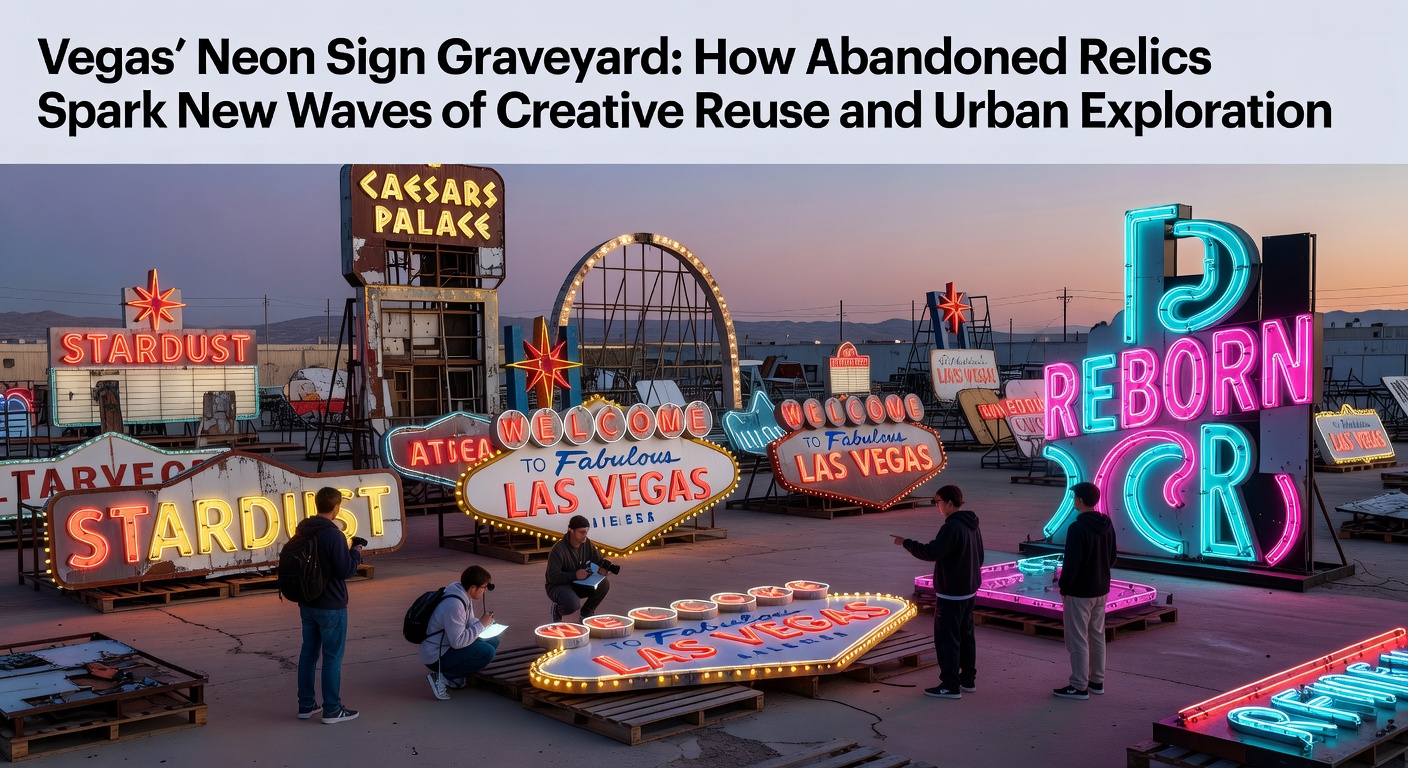
The Neon Sign Graveyard sits on the outskirts of Las Vegas where rows of decommissioned signs from former casinos, motels, and businesses stand stacked and waiting for new purposes. These relics arrived after decades of operation along the Strip and downtown corridors, and they now form the core collection at the Neon Museum's outdoor boneyard. Observers note that the site's location in a dry climate helps preserve the metal and glass components while allowing visitors to walk among oversized letters and animated figures that once pulsed with light. Many signs reached the graveyard after property renovations or ownership changes removed them from active display. The collection process began in the late twentieth century when preservation groups worked with local businesses to salvage pieces before demolition crews arrived. Today staff members catalog each arrival by original location, installation date, and manufacturer details. This documentation supports later restoration projects that return select signs to public view inside the museum's indoor galleries. Creative reuse has taken several forms as artists and designers study the collection for inspiration. Some signs supply individual letters or motifs for new installations in hotels and event spaces across the valley. Others appear in temporary public art projects where crews rewire sections and mount them on temporary frameworks for festivals. Data from the Las Vegas Arts District shows multiple installations each year draw directly from boneyard inventory, extending the lifespan of materials that would otherwise remain in storage. Urban exploration enthusiasts visit the area to photograph the contrast between faded paint and desert surroundings. Access occurs through guided tours that follow marked paths and safety protocols. These tours highlight engineering features such as original transformer housings and neon tube configurations. Participants learn how early sign makers combined glass bending techniques with electrical systems that could withstand extreme temperature swings common in southern Nevada. In May 2026 the Neon Museum plans additional evening sessions that extend operating hours for photography workshops focused on the boneyard. Organizers coordinate with local colleges to offer sessions on lighting techniques and historical context. Such programming builds on existing partnerships that already connect the site with design students from the University of Nevada, Las Vegas. Restoration teams continue to evaluate signs for full repair using original parts when available and modern equivalents when necessary. Completed projects return signs to downtown locations where they operate again as part of the city's historic district lighting plan. One recent example involved a 1960s motel arrow that now marks an entrance to a mixed-use development near Fremont Street. Records maintained by Clark County document these placements and track ongoing maintenance schedules. Additional reuse occurs through educational programs that ship smaller components to schools for classroom projects. Students examine tube construction and color application methods while learning about mid-century commercial design. The approach keeps physical artifacts circulating and reduces the total volume stored at the boneyard. 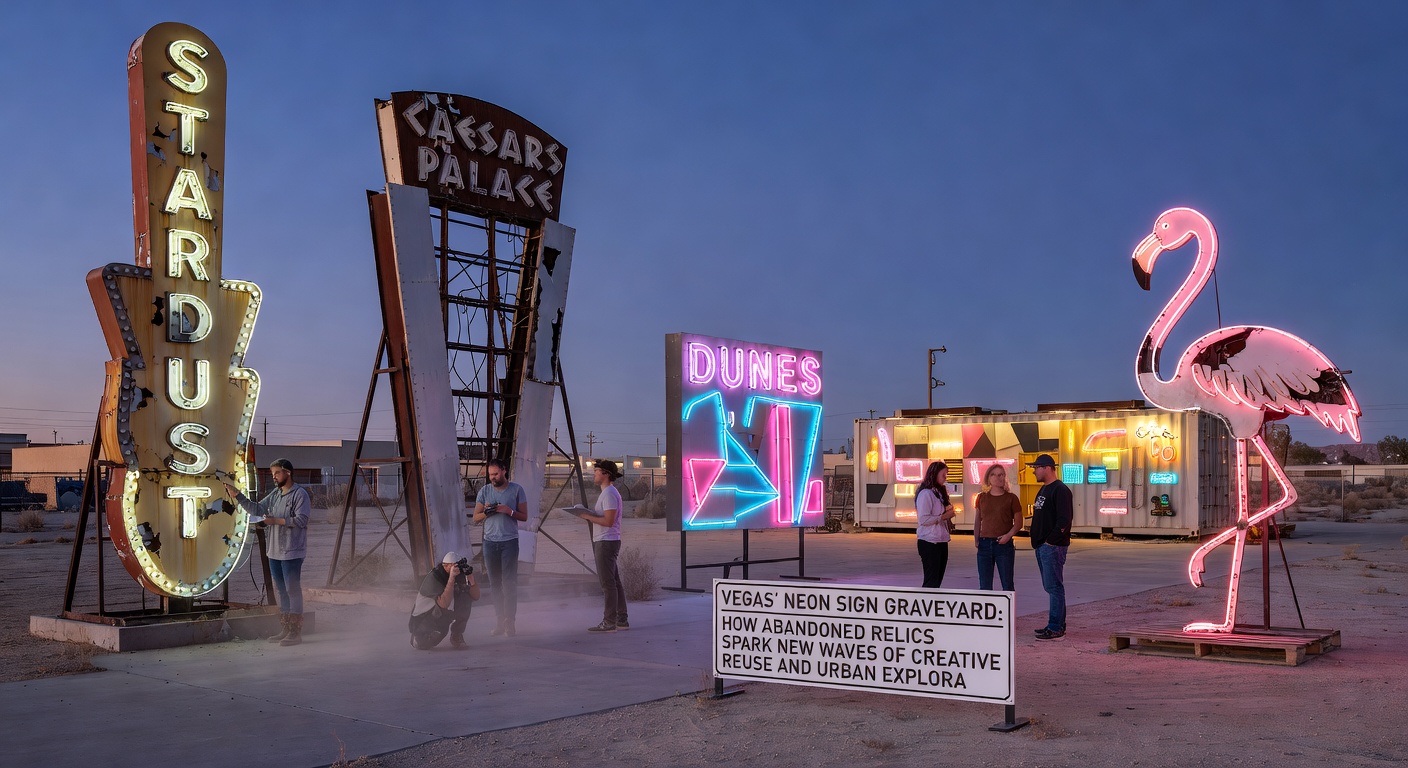 Community groups organize occasional clean-up events that remove dust accumulation and secure loose elements before wind events. These gatherings rely on volunteer labor coordinated through the museum's outreach calendar. Participation numbers have increased steadily since the program expanded to include corporate teams seeking team-building activities tied to local heritage. Researchers from preservation organizations have studied the graveyard's role in broader conversations about material reuse in arid urban environments. Findings indicate that dry storage conditions slow corrosion compared with humid regions, allowing longer intervals between interventions. Reports from the National Park Service heritage documentation projects reference similar approaches in other western cities where large-scale signage once defined commercial corridors. The graveyard also functions as a reference library for sign fabricators who consult older examples when replicating period aesthetics for new venues. Fabricators photograph mounting brackets and wiring layouts before fabricating updated versions that meet current electrical codes. This exchange keeps traditional techniques visible while adapting them to contemporary safety standards. Future acquisitions will depend on demolition schedules and business transitions along major corridors. Museum staff maintain contact lists with property owners to receive advance notice when signs become available. Such coordination reduces last-minute scrambles and increases the likelihood that distinctive pieces enter the collection rather than entering scrap yards.