The Intricate Web of Vendor Contracts Supplying Seasonal Produce and Specialty Items to Strip Restaurants
Written by Uma Hartmann · May 28, 2026
The Intricate Web of Vendor Contracts Supplying Seasonal Produce and Specialty Items to Strip Restaurants
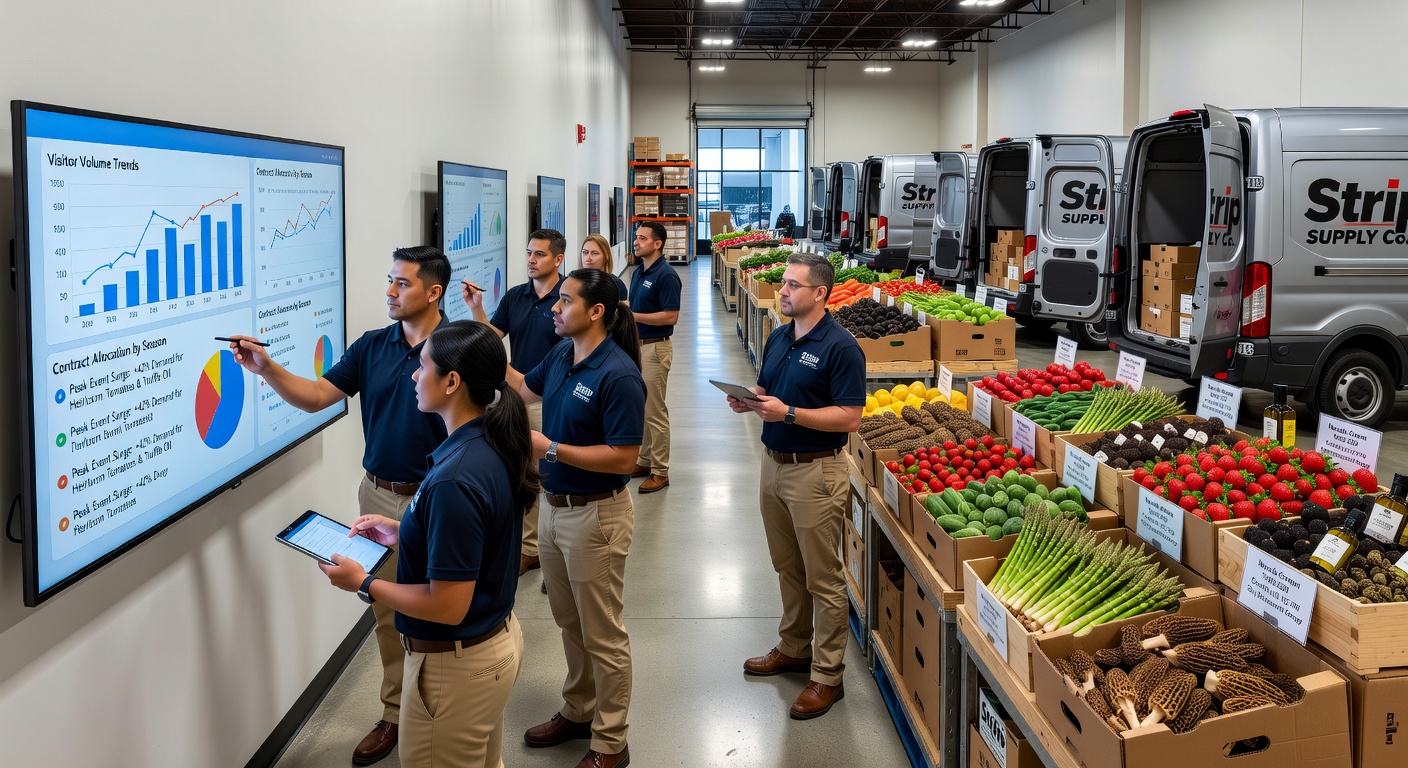
Las Vegas Strip restaurants rely on layered vendor contracts to secure seasonal produce alongside specialty items that range from imported truffles to regionally grown herbs, and these agreements incorporate volume adjustment mechanisms tied directly to visitor traffic patterns. Contracts typically span multiple years yet embed clauses that permit rapid scaling during conventions, holidays, and major events while protecting against overcommitment in slower periods. Distributors coordinate with farms in California and Arizona for core vegetables, while specialty suppliers handle air-shipped goods from South America and Europe, all synchronized through central procurement offices that monitor hotel occupancy data in real time.
Core Elements of Vendor Agreements
Agreements between Strip properties and produce vendors establish fixed pricing tiers for staples like tomatoes and lettuce during peak harvest windows, yet they also define escalation formulas that activate when demand surges beyond forecasted thresholds. Observers note that these formulas often reference visitor volume indicators such as convention center bookings and flight arrival statistics, allowing suppliers to reroute shipments from secondary warehouses without renegotiating base terms. Payment structures frequently combine upfront deposits with performance bonuses tied to on-time delivery rates, and many contracts require vendors to maintain buffer inventory within a 50-mile radius of the Strip to accommodate sudden spikes.
Specialty items introduce additional complexity because their availability windows are narrower and their costs more volatile. Truffle contracts, for example, link payments to daily market indices from European auction houses, while contracts for microgreens grown in local vertical farms incorporate weather-related force majeure provisions that shift sourcing responsibility to alternate suppliers. Restaurants on the Strip therefore maintain parallel agreements with multiple vendors for the same item category, creating redundancy that prevents menu disruptions when one source experiences delays.
Adapting to Visitor Volume Shifts
Fluctuating visitor numbers drive the most intricate provisions in these contracts, particularly around peak events that can double daily covers at high-volume restaurants. Data from the Las Vegas Convention and Visitors Authority shows that major gatherings such as the Consumer Electronics Show in January and the National Finals Rodeo in December generate predictable demand surges, prompting vendors to pre-position inventory under pre-approved surge pricing schedules. May 2026 brings its own calendar of events, including several large trade shows and the start of the summer festival circuit, which vendors already factor into forward purchasing agreements signed months earlier.
Volume adaptation clauses frequently reference real-time dashboards that aggregate hotel room occupancy, restaurant reservation systems, and transportation logs. When thresholds are crossed, vendors gain authority to activate secondary logistics partners, often routing produce through dedicated cold-chain hubs near McCarran International Airport. Those who've studied these systems observe that the contracts also include rollback mechanisms, allowing restaurants to reduce standing orders within 48 hours if attendance projections fall short, thereby limiting waste and protecting profit margins.
Seasonal Sourcing and Specialty Item Logistics
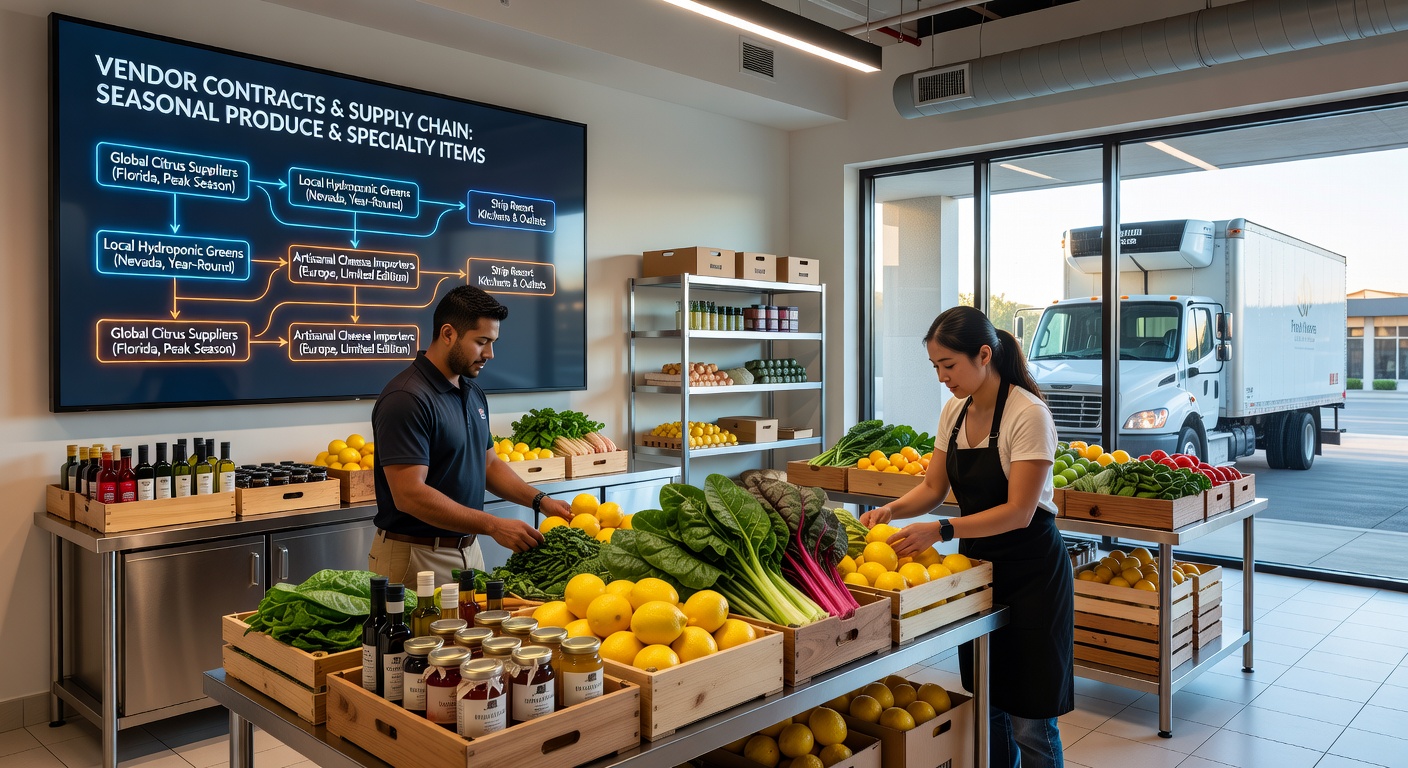
Seasonal produce contracts emphasize alignment with harvest calendars in California's Central Valley and Arizona's Yuma region, where lettuce and asparagus cycles dictate delivery schedules. Strip restaurants often lock in percentages of output from specific growers through multi-year deals that guarantee shelf space in exchange for predictable pricing. Specialty items such as Japanese wagyu or Peruvian asparagus require separate cold-storage arrangements and import documentation, and their contracts routinely include traceability requirements that satisfy Clark County health inspections as well as corporate sustainability reporting standards.
According to USDA agricultural marketing reports, produce wholesalers serving high-tourism corridors maintain dynamic routing protocols that respond to daily sales data from end clients. In the Las Vegas context this means vendors can divert shipments originally destined for other Western cities when Strip demand exceeds projections, a flexibility written into service-level agreements that penalize both under-delivery and overstocking.
Coordination Among Multiple Stakeholders
Behind each restaurant lies a network of primary distributors, secondary brokers, adn direct farm relationships that must operate in concert. Executive chefs typically participate in quarterly review meetings where contract performance metrics are examined alongside visitor forecast updates, and adjustments to standing orders are negotiated on the spot. Some properties have begun embedding data-sharing requirements that give vendors access to anonymized point-of-sale figures, enabling more accurate forecasting models that reduce last-minute air freight expenses.
Research from Australian produce export organizations highlights similar contract structures used by suppliers shipping stone fruit and berries to North American hospitality markets, where volume bands and surge pricing mirror those found in Las Vegas agreements. These parallels allow Strip operators to benchmark their own terms against international standards when renegotiating with global specialty vendors.
Conclusion
The vendor contract ecosystem supporting Strip restaurants functions through interlocking agreements that balance price stability, delivery reliability, and volume flexibility against the unpredictable rhythm of visitor arrivals. Seasonal produce flows follow agricultural calendars while specialty items travel through tightly managed import channels, all coordinated via clauses that activate or deactivate based on real-time occupancy and event data. As May 2026 approaches with its slate of conventions and festivals, these same mechanisms will determine how quickly kitchens can scale menus without compromising freshness or cost control.