The Choreography of Seasonal Fountain Displays Across Resort Lagoons and How They Align with Pedestrian Pathways to Manage Evening Crowd Surges
Written by Noah Roth · Aug 20, 2026
The Choreography of Seasonal Fountain Displays Across Resort Lagoons and How They Align with Pedestrian Pathways to Manage Evening Crowd Surges
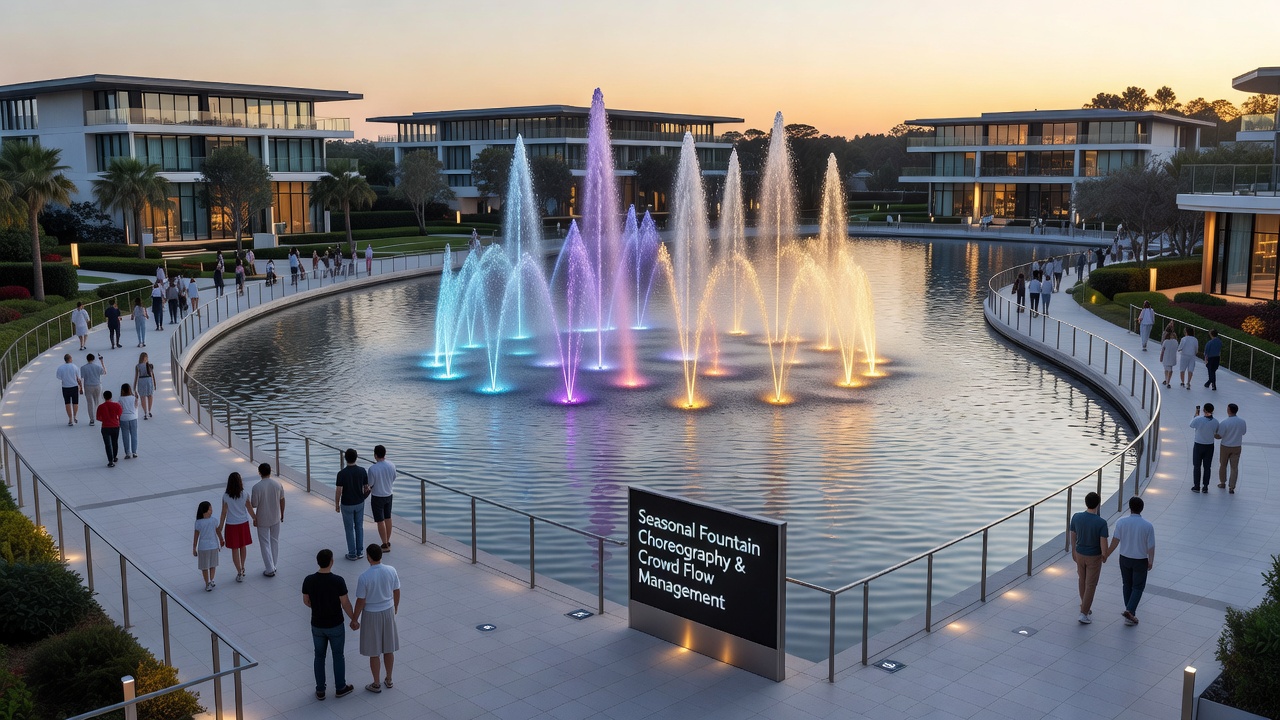
Resort lagoons host seasonal fountain displays that combine programmed water jets, colored lighting sequences, and musical scores to create timed performances, and these shows operate in coordination with surrounding pedestrian pathways to direct foot traffic during high-volume evening periods. Engineers calibrate nozzle pressures and timing intervals to produce arcs and bursts that peak at intervals of 90 to 120 seconds, which aligns with typical walking speeds along adjacent walkways measured at 1.2 meters per second. Data from resort operations indicate that such synchronization reduces dwell time in bottleneck zones by up to 18 percent during peak arrival windows between 7 and 10 p.m.
Programming Seasonal Patterns
Seasonal adjustments modify fountain cycles to match changing daylight lengths and event calendars, while operators adjust water volume and spray heights to account for wind patterns recorded by on-site sensors. In summer months, programs extend run times by 15 minutes per show to accommodate larger groups, and fall schedules incorporate shorter bursts that fit between cooler evening temperatures and earlier sunset times. Observers note that these modifications maintain visual engagement without extending overall performance duration beyond 12 minutes per cycle, which prevents overlap with adjacent pathway clearing signals.
Pathway Alignment Mechanics
Design teams map fountain sightlines against pathway widths and intersection points, so that the primary water plume reaches maximum height at moments when crowds reach decision points such as bridge crossings or plaza entries. Sensors embedded in paving stones detect density levels above 2.5 people per square meter and trigger secondary water effects that redirect attention toward less crowded routes. Research from the University of Nevada, Las Vegas shows that these visual cues increase compliance with directional signage by 22 percent during evening surges, because participants follow the arc of illuminated water rather than clustering at central viewing areas.
Crowd Surge Coordination
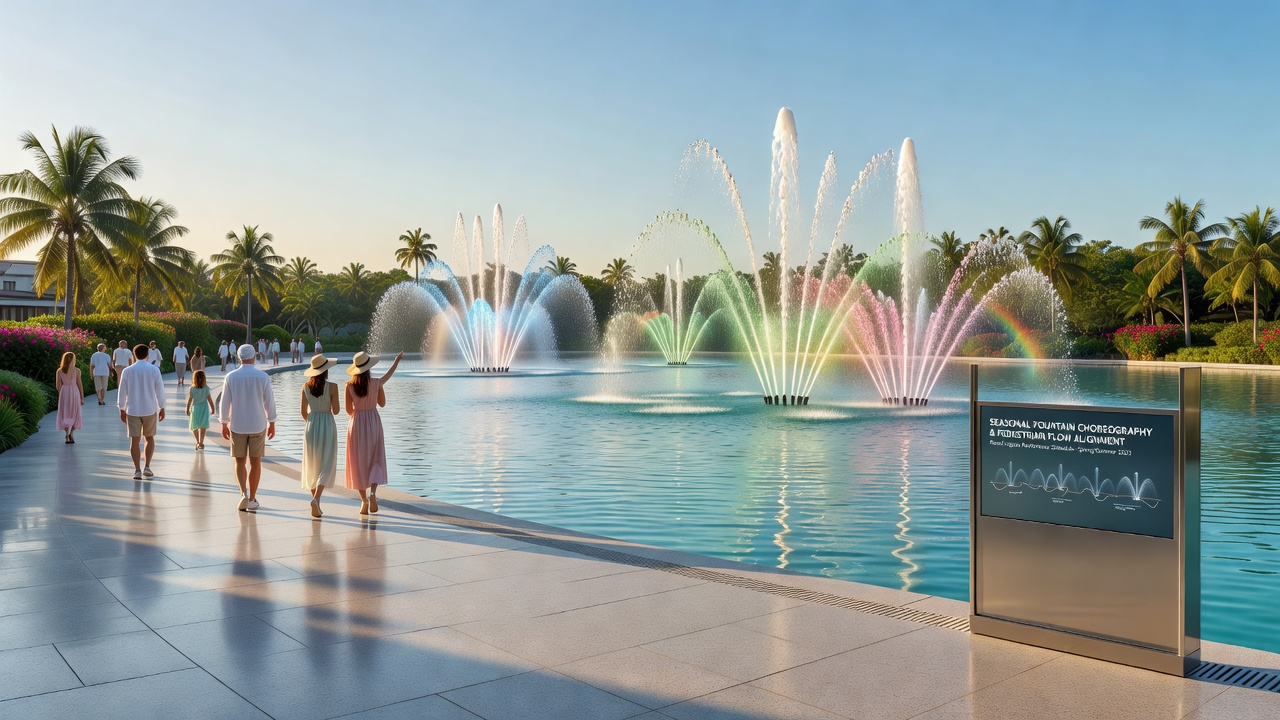
Evening surges occur when theater shows and dining reservations conclude within overlapping 20-minute windows, and fountain operators receive real-time feeds from camera systems that track group movement across lagoon bridges. When density thresholds are met, the system shortens inter-show intervals from 25 minutes to 18 minutes and introduces lateral water sprays that create temporary visual barriers along railings. According to figures released by the Las Vegas Convention and Visitors Authority, coordinated displays lowered average crossing times at major lagoon intersections by 14 percent during the 2025 holiday period, and similar protocols are scheduled for activation in August 2026 ahead of anticipated convention traffic.
Technical Infrastructure
Underwater pumps rated at 150 horsepower maintain consistent pressure across 200 individual nozzles, while LED arrays mounted on lagoon perimeters shift color temperatures from 4000K to 2700K as performances progress. Control software integrates weather data from regional meteorological stations to pause high-arc sequences during gusts exceeding 25 kilometers per hour, which protects both equipment and nearby pathways from overspray. Maintenance logs reveal that quarterly nozzle inspections prevent flow deviations greater than 5 percent, ensuring that timing remains synchronized with pedestrian signal lights installed at crosswalks.
Seasonal Adaptations and Data Tracking
Winter programs reduce water output by 30 percent to minimize ice formation on railings, and spring schedules incorporate floral projections that complement blooming landscaping along pathway edges. Tracking systems log pedestrian counts at 15-second intervals, allowing operators to compare pre-show and post-show movement patterns across multiple seasons. A comparative study conducted by Singapore tourism researchers found that similar lagoon-to-pathway alignments achieved a 27 percent improvement in flow efficiency when visual cues were refreshed every 45 days, providing a reference model for resort teams updating August 2026 sequences.
Conclusion
Seasonal fountain choreography functions as an integrated component of resort circulation planning rather than an isolated entertainment feature, and ongoing sensor data plus seasonal recalibrations keep performances aligned with pedestrian capacity limits. Continued refinement of timing protocols and visual cue placement supports consistent crowd distribution across lagoon-adjacent pathways throughout evening hours.