The Algorithmic Dance of Dynamic Room Rates: How Convention Calendars and Sports Betting Odds Reshape Strip Hotel Inventories Overnight
Written by Noah Roth · Jul 30, 2026

The Algorithmic Dance of Dynamic Room Rates: How Convention Calendars and Sports Betting Odds Reshape Strip Hotel Inventories Overnight
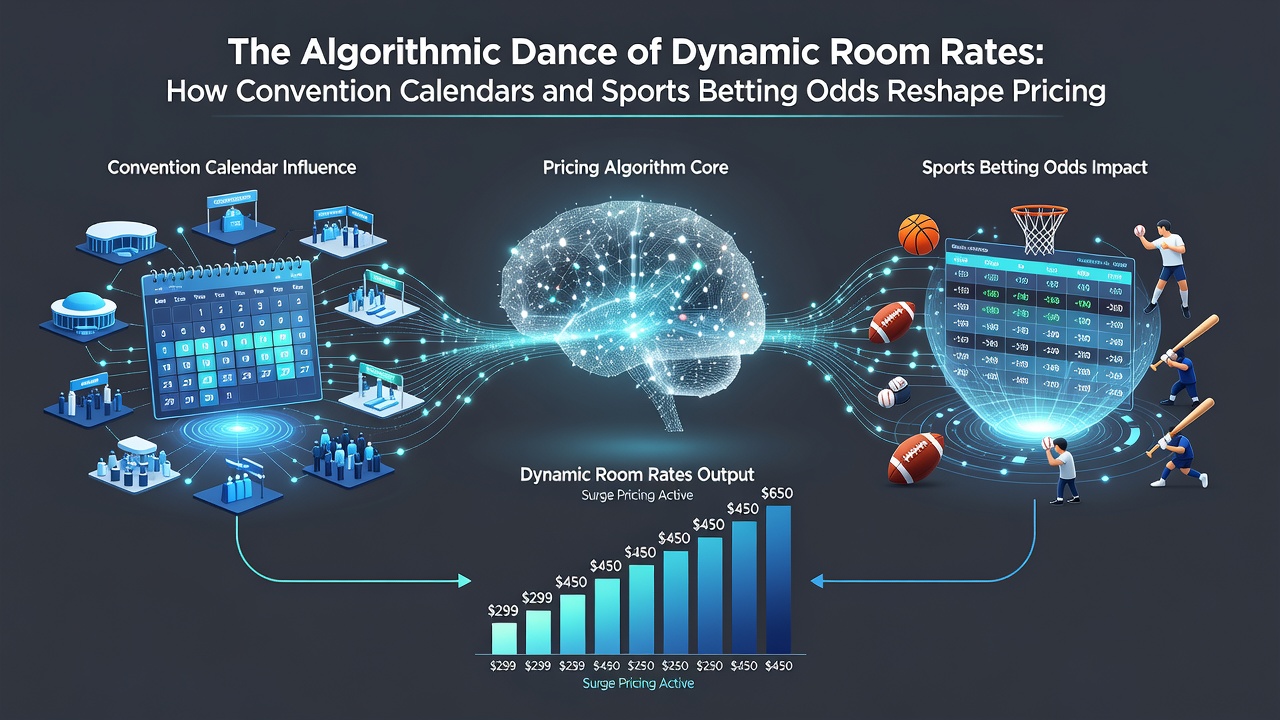
Hotel operators along the Las Vegas Strip adjust room inventories through automated systems that respond to convention schedules and live sports betting data, and these adjustments often occur within hours of new information becoming available. Convention calendars feed large blocks of demand into the market while sports betting odds shift minute by minute, and revenue management platforms translate both signals into price changes that appear on booking sites before dawn.
Convention Calendars Drive Bulk Demand
Large-scale events listed on the Las Vegas Convention and Visitors Authority calendar create predictable surges that extend across multiple properties, and hotel systems reserve blocks of rooms months in advance while leaving smaller inventory pools open for last-minute adjustments. When a major trade show registers higher-than-expected attendance, algorithms increase rates for remaining standard rooms and reduce availability for flexible booking classes, and observers note that these shifts frequently take place overnight after registration numbers are finalized. Data from past events shows that properties within walking distance of the Las Vegas Convention Center experience the steepest inventory reductions, whereas hotels farther south along the Strip see more gradual changes because shuttle and monorail access spreads demand across a wider area.
Sports Betting Odds Influence Short-Term Fluctuations
Live betting markets on major league games and championship events generate rapid swings in visitor projections, and revenue teams monitor odds feeds that correlate with hotel search volume. When a championship series extends to a decisive game or when a high-profile boxing match draws heavier wagering than expected, systems detect corresponding increases in same-day and next-day room requests, and rates adjust accordingly while availability for walk-up guests shrinks. Researchers at the University of Nevada, Las Vegas have tracked these patterns and found that sports-related demand spikes often overlap with midweek convention traffic, creating compound effects that push algorithms to prioritize higher-margin transient bookings over group allocations.
Overnight Algorithm Updates and Inventory Controls
Revenue management platforms run batch processes between 2 a.m. and 5 a.m. that incorporate fresh convention attendance figures and updated betting lines, and these runs recalculate optimal inventory distribution across room categories. When the models identify a risk of overselling at current rates, they close lower-priced channels and open premium categories, and front-desk staff receive updated allocation reports before the morning shift begins. Properties that participate in shared inventory networks across multiple brands can move unsold rooms into sister properties within the same portfolio, and this movement happens through automated feeds that prevent double bookings while maximizing overall occupancy.
July 2026 is already showing several overlapping events on preliminary calendars, including a major electronics trade show and a heavyweight title fight scheduled for the same weekend, and analysts expect the combined demand to trigger earlier and more aggressive inventory restrictions than seen in previous years. Systems that incorporate weather forecasts and flight arrival data further refine these calculations, because delayed incoming flights or extreme heat can alter same-day booking behavior and prompt additional adjustments before checkout time.
Integration of External Data Sources
Modern platforms pull structured data from convention organizers and from licensed sportsbooks operating under Nevada Gaming Control Board oversight, and they combine that information with proprietary booking histories to generate forecasts. When betting volume on a particular event exceeds historical averages, the models treat that signal as an indicator of increased foot traffic and higher hotel demand, and they respond by tightening availability for promotional rates. Industry reports indicate that properties using multi-source algorithms achieve occupancy targets with fewer manual interventions, although human revenue managers still review outlier scenarios such as sudden event cancellations or venue changes.
Conclusion
The interplay between convention calendars and sports betting odds produces continuous recalibration of Strip hotel inventories, and the process relies on overnight algorithmic cycles that translate external signals into immediate rate and availability changes. Observers tracking these systems note that the speed of adjustment continues to increase as data feeds become more granular and as machine-learning models incorporate additional variables such as real-time flight manifests and social-media sentiment. Properties that maintain flexible inventory controls remain positioned to capture revenue from both planned conventions and spontaneous sports-driven arrivals, while travelers who monitor booking platforms overnight can observe the resulting price movements in real time.