Shuttle Coordination Strategies Easing Access from Peripheral Lots to Core Strip Destinations Amid Peak Crowds
Written by Ben Reed · Aug 1, 2026
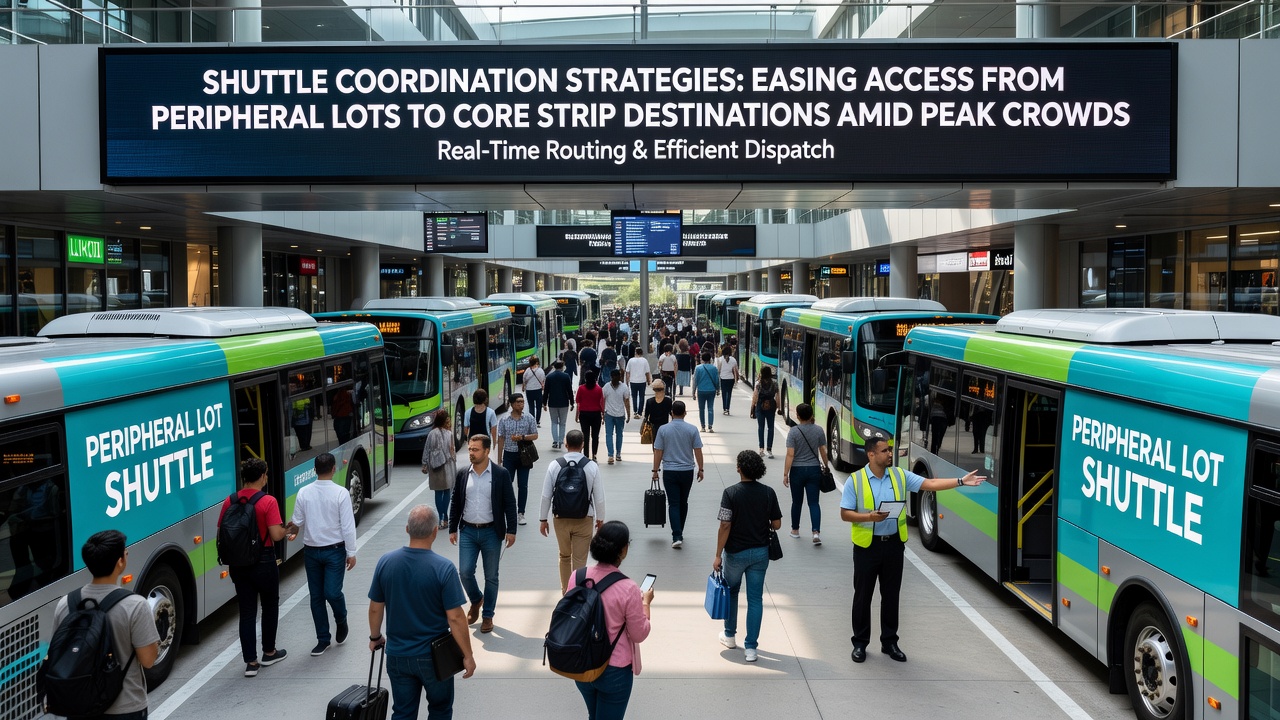
Shuttle Coordination Strategies Easing Access from Peripheral Lots to Core Strip Destinations Amid Peak Crowds
Las Vegas Strip operators coordinate shuttle fleets from outlying parking facilities to central resort zones when visitor volumes spike, and these systems rely on timed departures, shared tracking platforms, and designated pickup zones that reduce private vehicle traffic on Las Vegas Boulevard. Data from the Regional Transportation Commission of Southern Nevada shows that coordinated routes cut average transfer times by 18 minutes during convention peaks compared with uncoordinated operations, while figures from the Nevada Department of Transportation indicate peripheral lot usage rose 27 percent between 2023 and 2025.
Route Timing and Fleet Allocation Models
Transportation planners adjust shuttle intervals based on real-time occupancy sensors placed at lots such as those near the Las Vegas Convention Center and the World Market Center, and dispatchers increase vehicle frequency when sensors detect more than 65 percent capacity. During major events, operators deploy articulated buses on high-demand corridors while smaller shuttles serve secondary stops, and this tiered approach allows one fleet to handle 1,200 passengers per hour on primary routes without creating bottlenecks at core Strip drop-off points. Studies from the University of Nevada, Las Vegas transportation research group have documented that dynamic scheduling reduces wait times by 32 percent when integrated with hotel reservation data that forecasts daily arrivals.
Digital Integration and Passenger Information Systems
Mobile applications display live shuttle locations and estimated arrival times at peripheral lots, and these platforms pull data from GPS units installed on every vehicle in the coordinated network. When crowds exceed normal thresholds, the system automatically pushes delay alerts and suggests alternative lots with available capacity, and this information flow keeps visitors from converging on already full facilities. Observers note that integration between hotel kiosks and shuttle apps allows guests to reserve a seat on a specific departure while still in their rooms, and such reservations feed directly into dispatch algorithms that balance loads across multiple routes.
August 2026 Projections and Infrastructure Adjustments
Event calendars for August 2026 list several large-scale conventions and music festivals that are expected to push daily Strip visitation above 320,000 people on peak days, and planners have already begun reallocating shuttle resources from weekday express routes to weekend overflow corridors. Construction of additional loading bays at the south end of the Strip is scheduled for completion by July 2026, and these bays will accommodate simultaneous boarding for four extra buses during the busiest evening windows. Data released by the Las Vegas Convention and Visitors Authority projects that the expanded coordination network will handle an estimated 14 percent more transfers than the 2025 summer season without extending average ride durations.
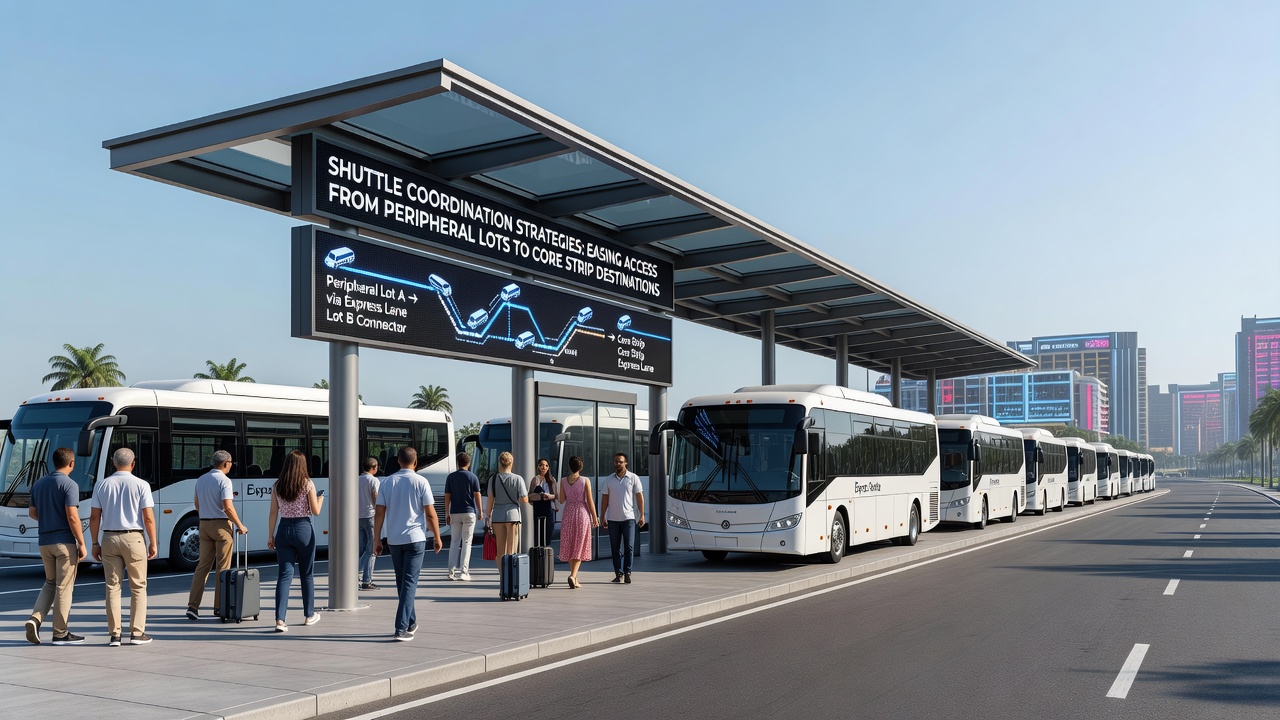
Partnership Structures Between Lots and Resorts
Peripheral lot operators maintain agreements with multiple Strip properties that guarantee priority drop-off access during designated hours, and these contracts include shared revenue models based on passenger counts verified through electronic ticketing. Resort security teams receive advance manifests that list expected shuttle arrivals, and this coordination allows staff to stage directional signage and temporary barriers that prevent pedestrian spillover onto vehicle lanes. One documented case involved a major property that adjusted its porte-cochère layout after analyzing six months of shuttle arrival logs, and the redesign increased throughput by 22 percent during the subsequent peak period.
Traffic Flow Management and Dedicated Infrastructure
Dedicated shuttle lanes on selected access roads reduce conflicts with private vehicles entering and exiting lots, and signal timing at key intersections gives priority to buses when occupancy sensors detect full loads. Enforcement teams monitor these lanes during peak windows, and violations trigger immediate towing under existing municipal ordinances. Research published by the Transportation Research Board indicates that dedicated infrastructure combined with real-time dispatch lowers overall vehicle miles traveled by shuttles by 11 percent, because fewer empty repositioning trips occur when routes stay synchronized with actual demand.
Conclusion
Coordinated shuttle operations between peripheral lots and central Strip destinations rely on sensor-driven scheduling, digital passenger interfaces, contractual partnerships, and targeted infrastructure improvements that together manage high-volume periods. Records from multiple agencies show measurable reductions in transfer times and vehicle congestion when these elements operate as an integrated system, and continued adjustments tied to event calendars such as August 2026 are expected to maintain performance as visitation patterns evolve.