Service Tunnels Beneath Resort Complexes Coordinate Staff Logistics Across the Las Vegas Strip
Written by Uma Hartmann · Jun 4, 2026
Service Tunnels Beneath Resort Complexes Coordinate Staff Logistics Across the Las Vegas Strip
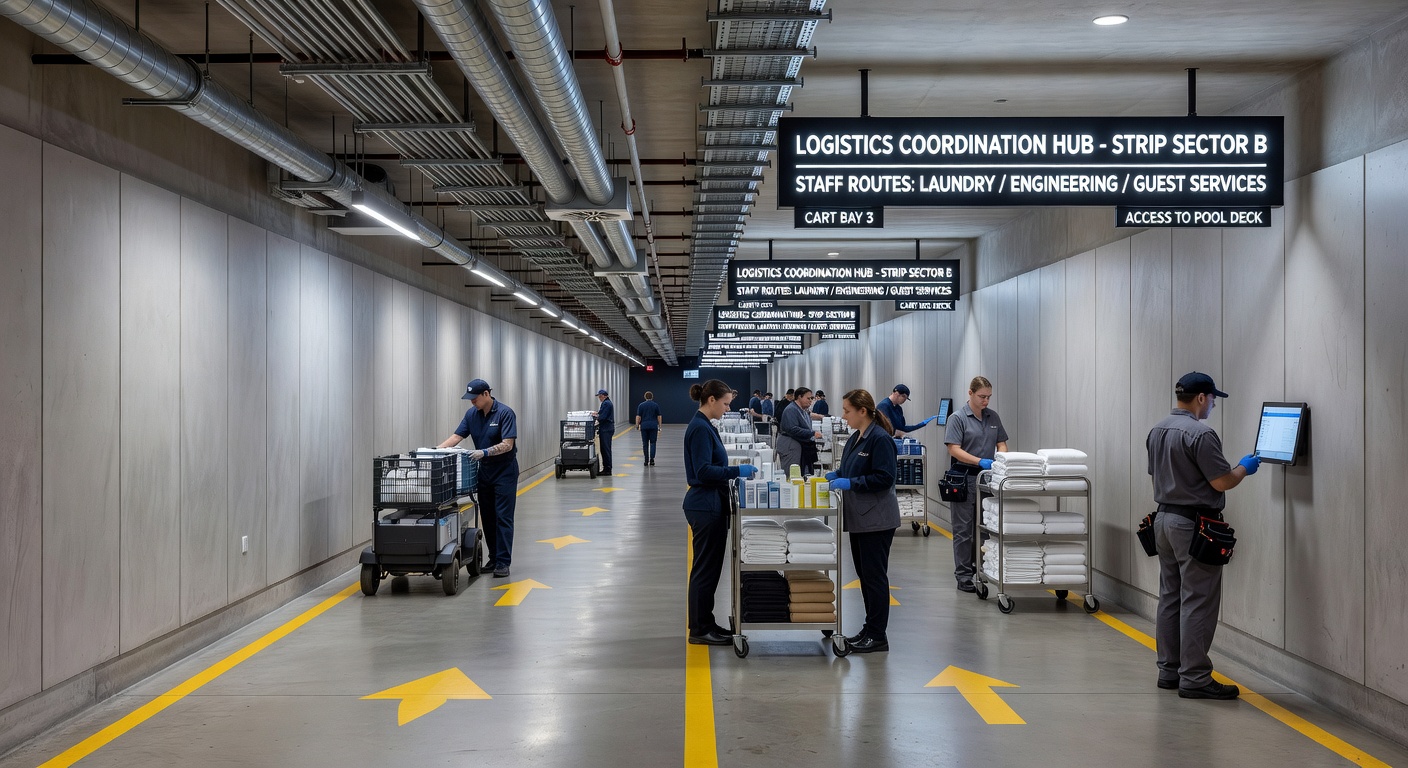
Service tunnels form an extensive underground network beneath many resort complexes along the Las Vegas Strip, and they support the movement of employees, supplies, and equipment without intersecting guest areas. These passageways connect back-of-house operations within individual properties while some systems link adjacent resorts to streamline shared logistics tasks. Construction of such infrastructure began expanding significantly during the 1990s as mega-resorts replaced smaller hotels, and the design allows staff to travel between kitchens, laundry facilities, loading docks, and performance venues in climate-controlled environments.
Development of Tunnel Infrastructure
Engineers incorporated service tunnels during major resort builds to address growing operational demands, and the systems evolved to include climate control, security checkpoints, and directional signage. Data from the Nevada Gaming Control Board indicates that properties exceeding 3,000 rooms typically allocate between 5 and 10 percent of their footprint to underground logistics space. Workers use electric carts and conveyor systems to transport linens, food deliveries, and maintenance tools, which reduces surface-level vehicle traffic and maintains the guest experience above ground. Observers note that these tunnels often feature parallel walkways for pedestrian staff movement alongside dedicated lanes for motorized transport.
Coordination of Daily Staff Movements
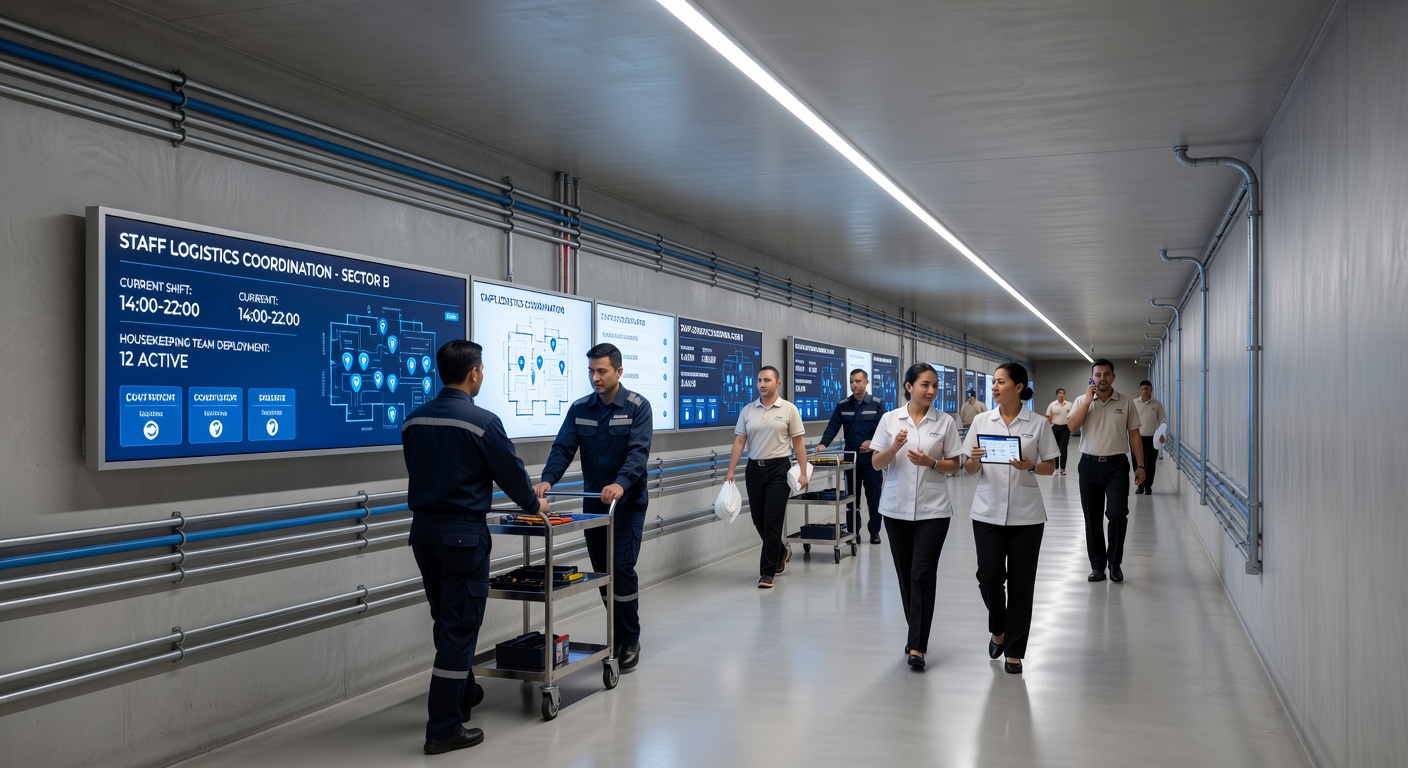
Shift changes represent one primary function of the tunnel networks, since thousands of employees arrive and depart each day across multiple resorts. Time-stamped access logs and integrated scheduling software allow managers to direct workers to specific entry points, and this coordination prevents bottlenecks during peak periods such as breakfast service or evening entertainment transitions. Research from the University of Nevada, Las Vegas hospitality program shows that properties using centralized tunnel routing report average reductions in staff transit times of 12 to 18 minutes per shift. Uniform distribution centers located within the tunnels stock employee attire and safety gear, enabling quick changes before workers reach their assigned stations.
Supply Chain and Cross-Property Logistics
Many tunnels incorporate loading zones connected directly to freight elevators, which permits delivery trucks to unload at designated subsurface points rather than competing with valet traffic. Perishable goods move through refrigerated corridors to multiple restaurant outlets within a single resort complex, and some interconnected systems allow limited transfers of specialty items between neighboring properties during high-demand events. In June 2026, scheduled expansions of shared utility corridors between two major Strip operators will add capacity for increased convention traffic expected that month. Waste removal systems also run through these spaces, separating recyclables and organics before they reach surface collection points.
Security and Operational Controls
Access remains restricted through badge readers and biometric stations positioned at every junction, while surveillance cameras feed into central command centers. These measures align with requirements set by the Nevada Gaming Control Board for maintaining separation between public and restricted areas. Emergency protocols include backup power for lighting and ventilation, along with evacuation routes that surface at pre-determined assembly points. Maintenance crews conduct nightly inspections of track systems and air handling units to ensure continuous operation during 24-hour resort activity.
Integration with Broader Strip Operations
Although most tunnels stay within individual resort boundaries, some shared utility easements allow coordination of services such as linen processing and uniform laundering across multiple operators. This arrangement supports peak periods when one property may lend staff or supplies to another during large-scale events. American Gaming Association reports highlight how such efficiencies contribute to overall workforce management across the corridor, particularly as visitor volumes fluctuate seasonally. The tunnels also house fiber optic lines and data centers that support point-of-sale systems and security networks for surface operations.
Conclusion
Service tunnels continue to evolve as resort operators refine logistics models and accommodate larger events scheduled for 2026 and beyond. Their role in moving personnel and materials remains central to daily operations along the Strip, and ongoing infrastructure adjustments reflect measured responses to changing visitor patterns and staffing requirements.