How Seasonal Conventions Reshape Temporary Entertainment Schedules and Hotel Block Bookings Throughout the Year
Written by Ben Reed · Jul 23, 2026
How Seasonal Conventions Reshape Temporary Entertainment Schedules and Hotel Block Bookings Throughout the Year
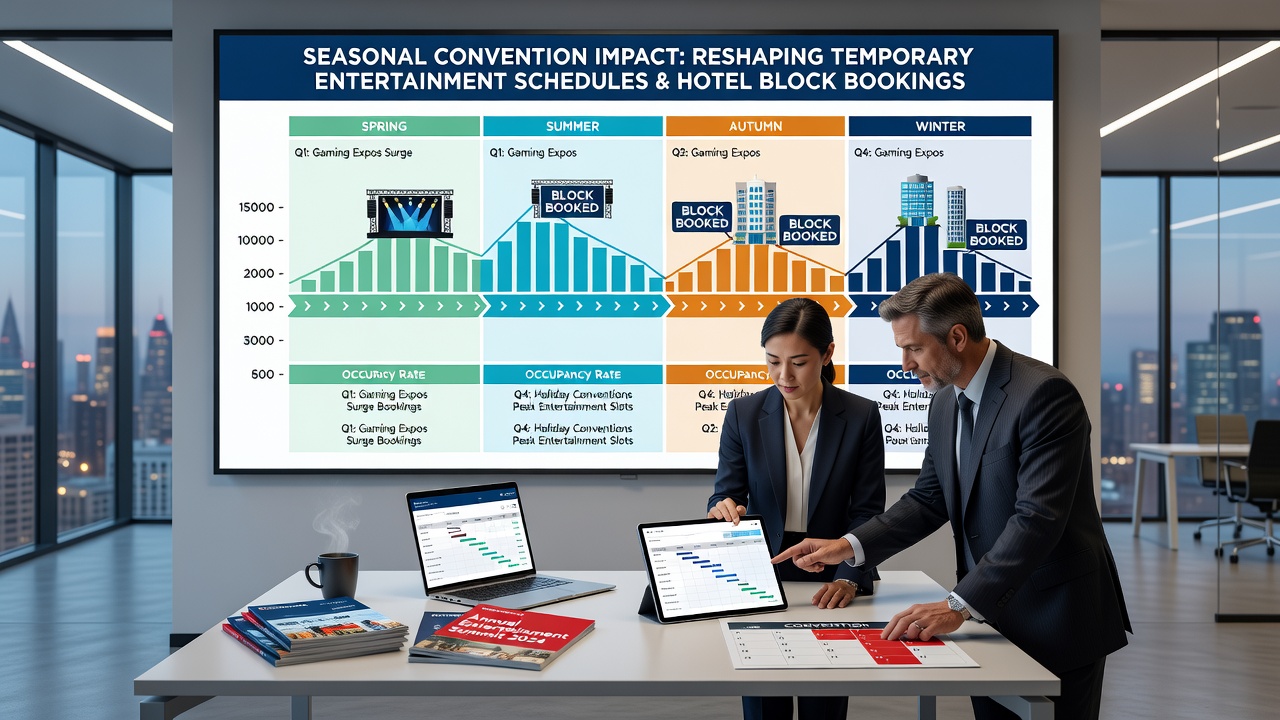
Las Vegas operates on a calendar driven by major conventions that cycle through the year, and these events dictate hotel block bookings while prompting shifts in entertainment offerings. Large gatherings such as the Consumer Electronics Show in January pull thousands of attendees who reserve room blocks months in advance, which reduces availability for general visitors and encourages hotels to adjust rates based on demand patterns tracked by the Las Vegas Convention and Visitors Authority.
Winter and Spring Convention Cycles
January through April brings a concentrated series of trade shows that include electronics, broadcasting equipment, and automotive displays, and organizers secure blocks across multiple properties along the Strip. Hotels respond by allocating 30 to 50 percent of inventory to these groups, which leaves fewer standard rooms open and pushes entertainment venues to schedule shorter runs or special performances timed around attendee availability. Data from industry reports shows that residency contracts often include clauses allowing date changes when convention calendars overlap with peak attendance periods.
Summer Adjustments and July 2026 Planning
July typically sees fewer major conventions than winter months, yet planners already coordinate for events scheduled in July 2026 that focus on technology and hospitality sectors. These bookings influence temporary entertainment by creating demand for late-night shows or pop-up installations that cater to business travelers rather than leisure crowds. Hotel properties coordinate with production companies to stage limited-engagement acts that fit within the shorter windows between convention sessions, and supply chain logistics for stage equipment adapt accordingly.
Fall Events and Their Ripple Effects
September and October host additional trade gatherings centered on fashion, food service, and medical equipment, which again require extensive room blocks that extend into shoulder periods. Observers note that entertainment schedules incorporate more daytime programming during these windows because attendees finish sessions earlier than leisure tourists. Hotels release portions of blocks back into general inventory when attendance projections fall short, yet the initial reservations still shape pricing models and availability calendars for months ahead.
Entertainment Schedule Adaptations
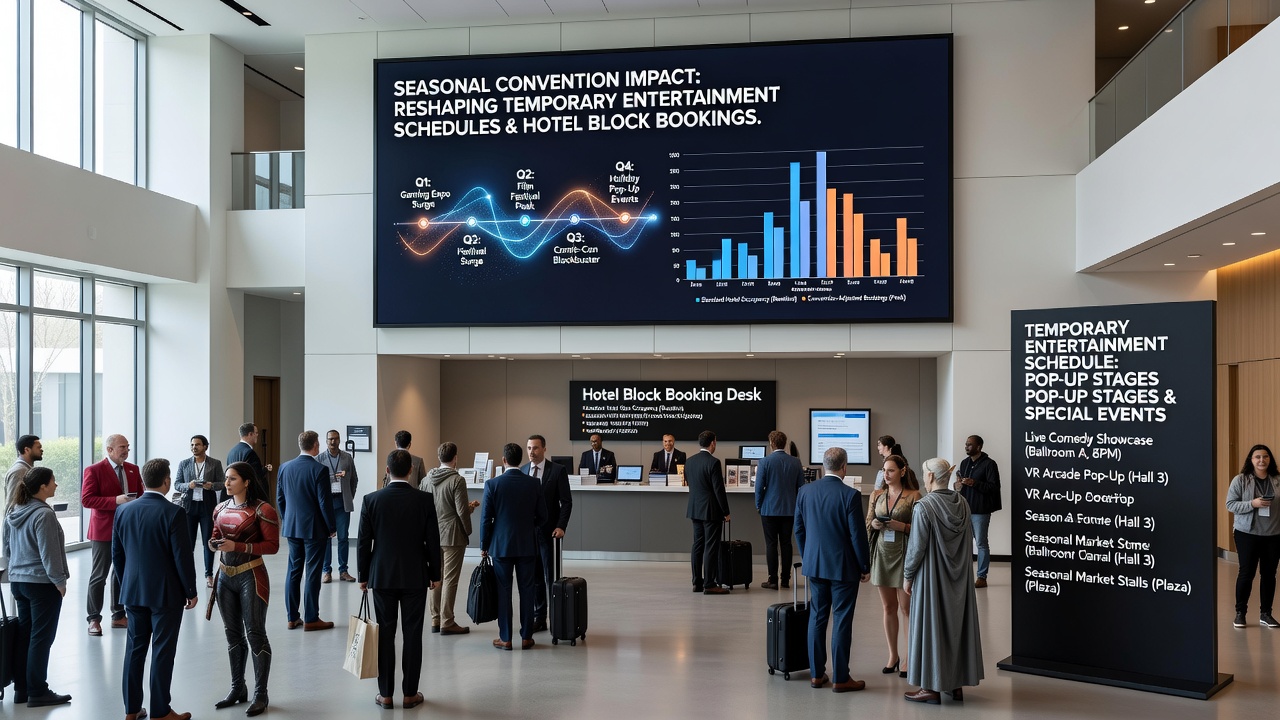
Production teams that manage theater residencies and arena shows track convention calendars closely because large attendee groups fill seats during midweek dates that otherwise see lower turnout. Temporary stages appear in ballrooms or outdoor plazas when hotels host private events tied to conventions, and these installations run for one or two weeks before crews dismantle them to restore regular configurations. According to figures released by the U.S. Travel Association, such flexibility in scheduling helps maintain consistent revenue streams across properties that rely on both group and individual bookings.
Hotel Block Management Practices
Block bookings operate through contracts that guarantee room counts at negotiated rates, and properties use revenue management software to forecast remaining inventory once these blocks are set. When conventions coincide with holidays or major sporting events, the combined demand leads to layered restrictions on cancellations and minimum stay requirements. Staff at front desks receive updated manifests that detail which blocks remain open, and digital systems redirect overflow guests to nearby partner hotels that maintain reciprocal agreements.
Coordination Between Sectors
Convention organizers, hotel revenue teams, and entertainment directors exchange data through shared platforms that update in real time, which allows adjustments when attendance numbers shift. One study conducted by researchers at the University of Nevada, Las Vegas examined how these information flows affect both room occupancy and ticket sales, revealing patterns that repeat across multiple calendar years. Temporary entertainment such as comedy showcases or music performances often receives marketing support from convention sponsors who purchase group tickets as part of attendee packages.
Conclusion
Seasonal conventions continue to set the rhythm for hotel block bookings and entertainment timelines in Las Vegas, with each quarter bringing distinct demands that require coordinated responses from multiple industries. The mechanisms established over decades allow properties and venues to maintain operations while accommodating the influx of group travelers that defines much of the city's annual activity.