Engineering Desert Oasis Aromas: The Science of Custom Fragrances in Strip Hotel Interiors
Written by Tina Vogel · Aug 22, 2026
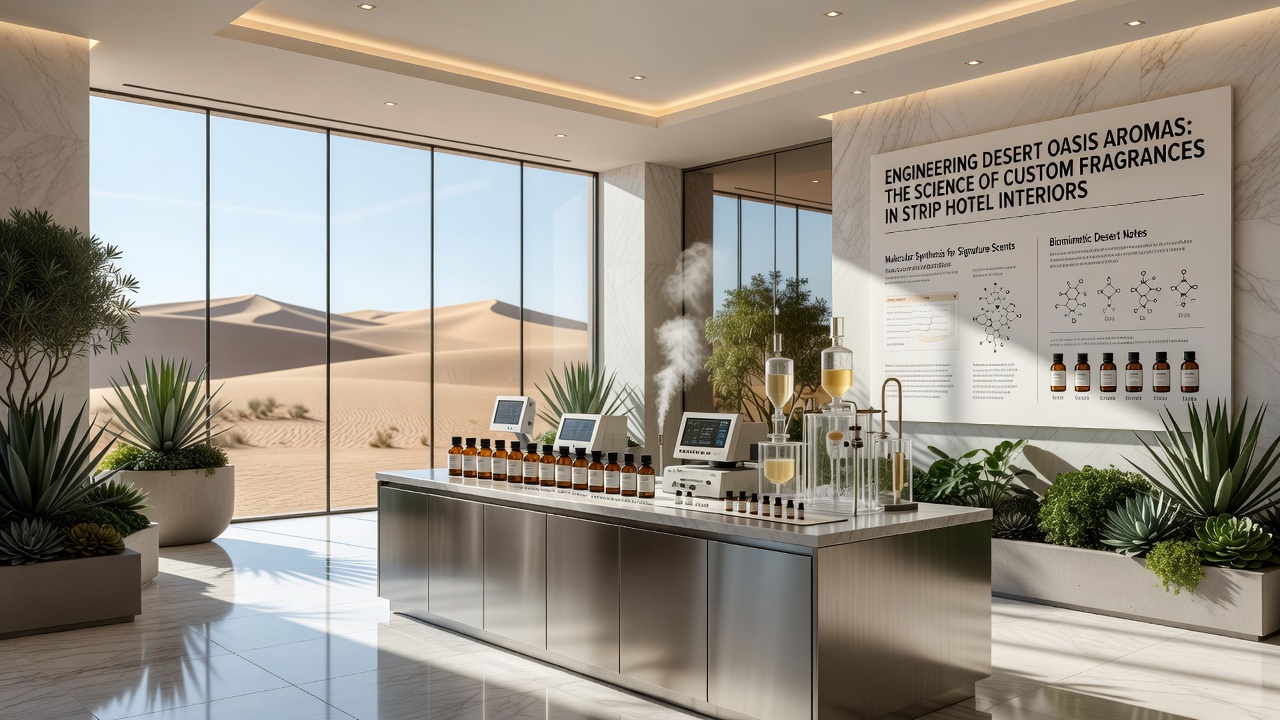
Engineering Desert Oasis Aromas: The Science of Custom Fragrances in Strip Hotel Interiors
Las Vegas Strip hotels have developed sophisticated systems that blend custom fragrances into interior environments, drawing on principles from chemistry, HVAC engineering, and environmental psychology to create consistent sensory experiences across large public spaces. These systems release carefully formulated scent compounds through centralized air handling units, where molecular volatility rates determine how quickly aromas disperse and linger in high-traffic areas such as lobbies, corridors, and casino floors.
Core Chemical Components and Formulation Processes
Fragrance engineers select base notes including sandalwood and citrus derivatives alongside top notes such as desert sage and light florals to evoke oasis imagery while maintaining stability under continuous air circulation. Data from the International Fragrance Association indicates that molecular weight and evaporation curves guide blending ratios, allowing scents to remain detectable for up to eight hours without overwhelming ventilation filters. Hotels coordinate with specialized laboratories that test compounds for compatibility with existing HVAC infrastructure, adjusting concentrations based on square footage and airflow velocity measurements taken during annual system audits.
Delivery Mechanisms and HVAC Integration
Engineers install micro-atomizers at multiple points within ductwork, synchronized with building management software that modulates release timing according to occupancy sensors and time-of-day patterns. These units operate at pressures between 2 and 5 psi to produce droplets small enough for even distribution yet large enough to avoid rapid dissipation. Maintenance crews calibrate sensors quarterly to prevent residue buildup on coils, a process that involves flushing lines with neutral solvents and verifying particle counts against manufacturer specifications. One installation at a major Strip property required redesigning return-air pathways to ensure uniform scent density from floor to ceiling across 40,000 square feet of gaming space.
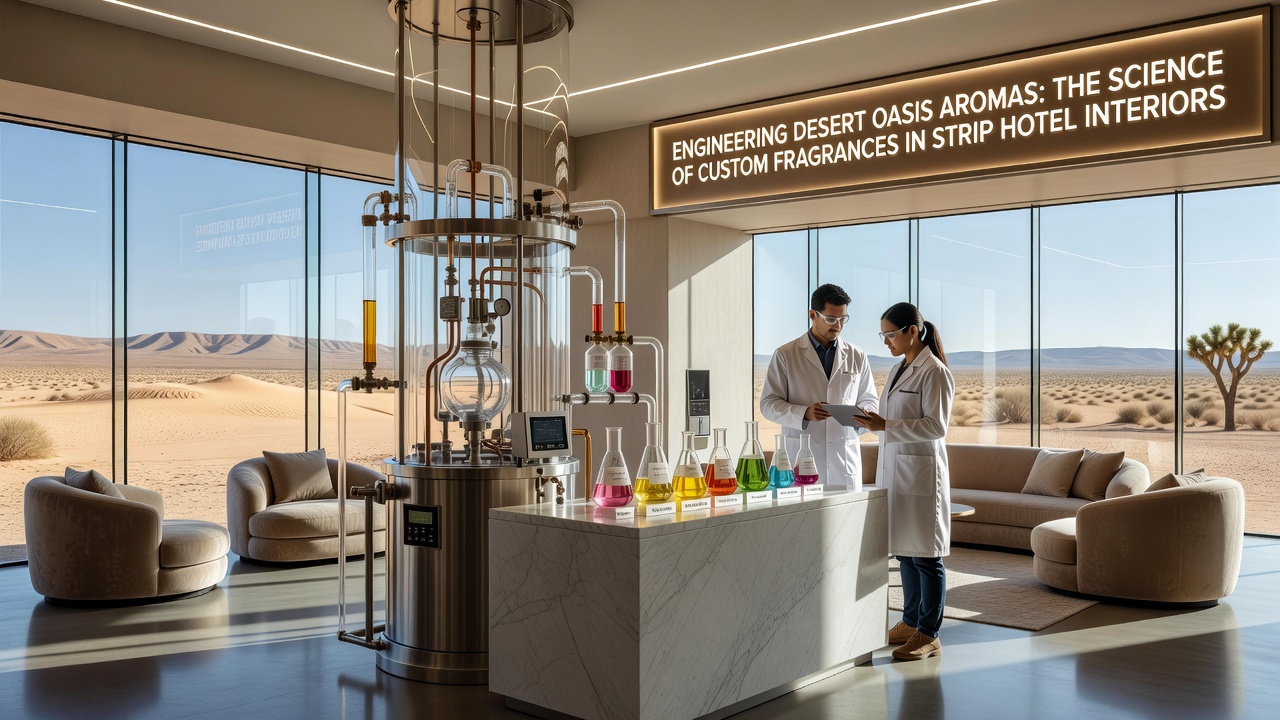
Desert-Specific Aromatic Profiles
Formulations incorporate native botanical references such as creosote and jojoba extracts balanced against synthetic stabilizers that withstand the low-humidity conditions typical of the Mojave region. Researchers at the University of Nevada, Las Vegas documented how these profiles interact with dry air to produce perceived freshness rather than cloying intensity, with gas chromatography confirming reduced oxidation rates compared with standard commercial blends. Procurement teams source raw materials through contracts that specify seasonal harvest dates, ensuring consistency in terpene content across annual production cycles.
Guest Movement and Environmental Monitoring
Property operators track foot traffic data alongside real-time air quality readings to adjust fragrance output during peak evening hours when visitor density rises. Studies published in the Journal of Sensory Studies show measurable correlations between controlled scent levels and longer dwell times in retail corridors adjacent to casino entrances. Technicians log these adjustments in centralized databases that feed predictive algorithms, allowing preemptive scaling before large events such as conventions or holiday periods. In August 2026 several properties plan to pilot wireless sensor arrays that transmit concentration data directly to mobile maintenance dashboards for faster response.
Regulatory Compliance and Safety Standards
Facilities adhere to guidelines from the U.S. Environmental Protection Agency and equivalent bodies in the European Union regarding volatile organic compound emissions from scent delivery equipment. Compliance documentation includes third-party laboratory reports verifying that total VOC output remains below established thresholds for indoor environments. Safety protocols require redundant shutoff valves and regular integrity checks on pressurized lines to mitigate risks associated with aerosolized compounds near electrical components.
Conclusion
Strip hotels continue to refine fragrance engineering through iterative testing and cross-disciplinary collaboration, producing measurable environmental controls that align with architectural layouts and operational demands. Ongoing data collection supports incremental adjustments that maintain scent consistency while meeting evolving standards for indoor air management.