Drone Swarms Lighting Up Holiday Skies: How Coordinated Aerial Displays Replace Fireworks and Redirect Evening Crowds Between Resort Properties
Written by Noah Roth · Aug 8, 2026
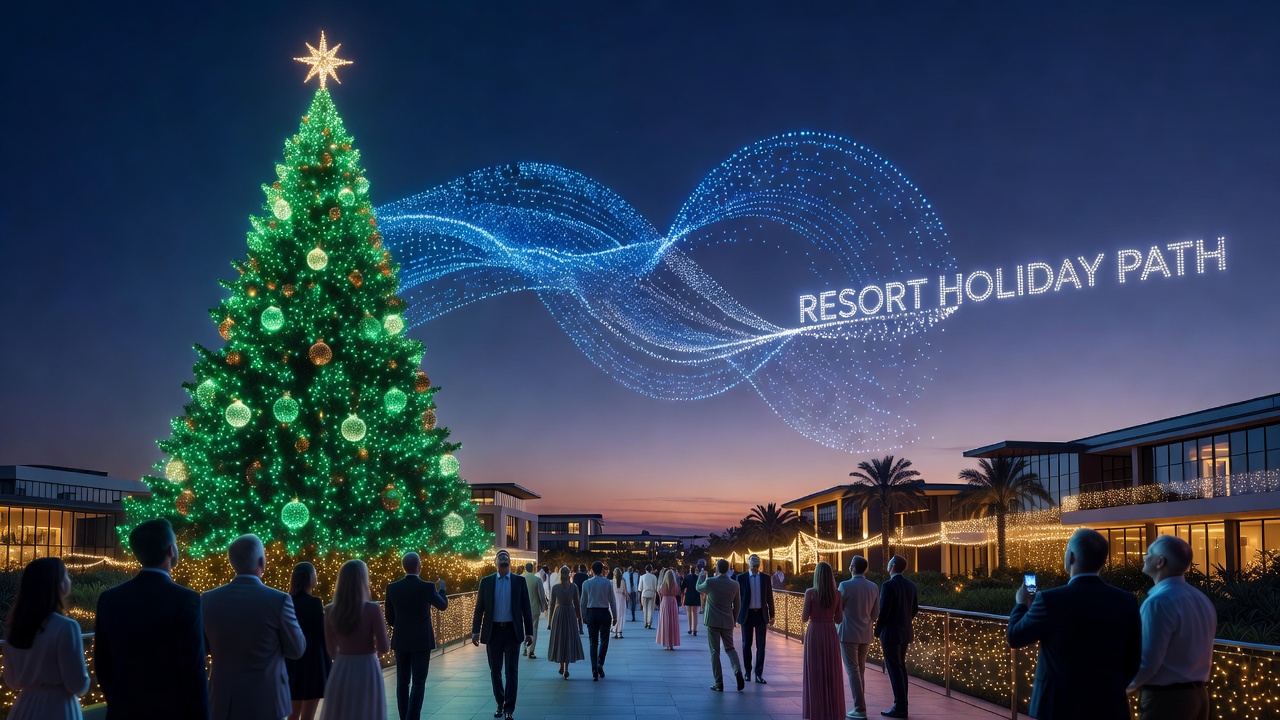
Drone Swarms Lighting Up Holiday Skies: How Coordinated Aerial Displays Replace Fireworks and Redirect Evening Crowds Between Resort Properties
Coordinated drone displays have taken over evening entertainment schedules at Las Vegas resorts during holiday periods, with operators programming hundreds of aircraft to create synchronized light formations that replace traditional fireworks. These systems rely on GPS-guided fleets that execute pre-planned flight paths while maintaining safe distances from buildings and spectators, and resort operators time the shows to encourage visitors to move between properties rather than remain in one location.
Technical Coordination Behind the Displays
Operators manage drone swarms through centralized software that assigns each unit a specific position in three-dimensional space, allowing formations such as holiday motifs, resort logos, and animated sequences to appear overhead. Data from multiple properties shows that these programs require precise synchronization with ground-based lighting and sound systems, while regulatory compliance with Federal Aviation Administration rules governs altitude limits and no-fly zones around the Strip. Federal Aviation Administration guidelines outline the operational standards that local companies follow when staging events, and the same protocols apply during peak holiday windows when crowds peak.
Resort staff coordinate start times across adjacent properties so that one display concludes as another begins several blocks away, which creates a natural flow of pedestrians along pedestrian bridges and sidewalks. Observers note that this sequencing reduces congestion at individual venues because visitors follow the next scheduled light sequence rather than lingering in a single casino or plaza area.
Crowd Movement Patterns During Holiday Seasons
Analytics from resort security systems indicate that drone displays lasting twelve to fifteen minutes prompt measurable shifts in foot traffic, with many groups relocating toward the next venue once the current formation ends. These movements align with pre-programmed intervals that account for walking times between major properties, and transportation data collected by local transit agencies confirms increased usage of monorails and sidewalks during these windows. Planning documents for the 2026 holiday calendar, released in August of that year, list additional drone events scheduled at intervals that match historical crowd-density reports.
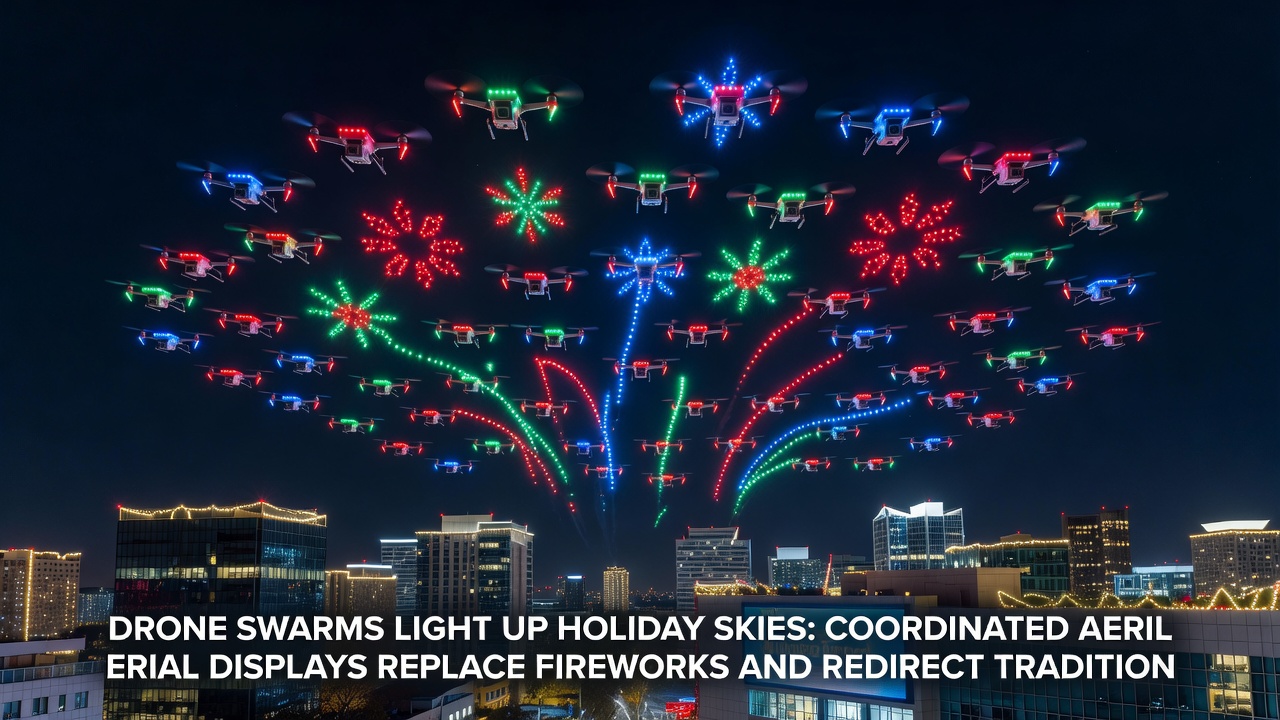
Case studies from multiple resorts demonstrate that the absence of loud pyrotechnics eliminates the need for temporary street closures that previously accompanied fireworks, allowing continuous pedestrian access along the Strip. Instead, operators use the visual cues of the drones themselves to guide movement, with formations pointing toward the next property hosting a show. Traffic management teams adjust signal timings at crosswalks during these periods to accommodate the redirected flow.
Regulatory and Safety Framework
Local authorities require each drone operator to submit flight plans that include emergency landing zones and collision-avoidance protocols, and the European Union Aviation Safety Agency maintains parallel standards for similar events held outside the United States. European Union Aviation Safety Agency documentation provides comparative data on swarm operations that U.S. planners reference when scaling events. Insurance requirements mandate real-time tracking of every aircraft, and operators must demonstrate the ability to ground the entire fleet within seconds if wind conditions change.
Studies conducted by university research teams have measured decibel levels during drone shows and found consistent reductions compared with fireworks, which in turn affects how long visitors remain outdoors before moving indoors to adjacent resorts. These measurements feed into updated scheduling models that resort planners use when mapping crowd routes for future seasons.
Integration With Resort Operations
Hotel and casino teams adjust staffing levels at entrances and retail corridors to handle the influx that follows each display segment, and digital signage updates in real time to highlight the next scheduled location. Vendor contracts for drone services often include clauses that tie payment to verified crowd-redirection metrics collected through camera and sensor networks. Those who have reviewed operational logs report that the system reduces peak density at any single property by distributing arrivals across a two-hour window rather than concentrating them at one fireworks finale.
Conclusion
Drone swarm technology continues to shape how Las Vegas resorts manage holiday evening crowds through precise timing, regulatory compliance, and data-driven scheduling. The approach replaces older pyrotechnic methods while maintaining visual entertainment value, and ongoing coordination between operators, regulators, and property managers supports consistent execution across multiple venues.