Astronomical Tours Past the City Glow Pair with Valley Hiking Routes to Balance High-Energy Nights and Quiet Daytime Explorations
Written by Noah Roth · Jul 18, 2026
Astronomical Tours Past the City Glow Pair with Valley Hiking Routes to Balance High-Energy Nights and Quiet Daytime Explorations
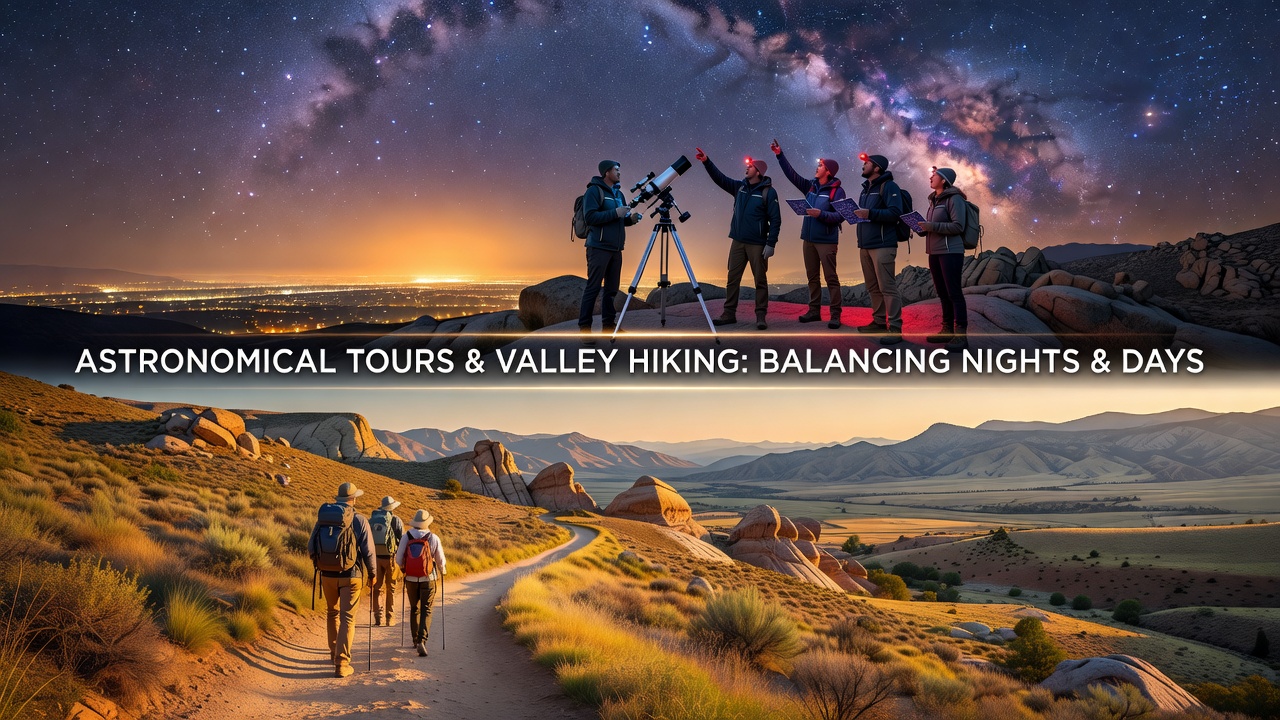
Las Vegas visitors often seek ways to offset intense nighttime entertainment with structured daytime activities, and astronomical tours beyond the urban light dome pair directly with valley hiking routes to create that contrast. These tours depart from the city after dark and travel to darker-sky locations where participants use telescopes to observe celestial objects, while the same travelers spend daylight hours on marked trails in surrounding valleys.
Light Pollution Patterns and Tour Logistics
Research from astronomy organizations shows that Las Vegas contributes significant light pollution across a 50-mile radius, which reduces visibility of stars and planets within city limits. Operators therefore schedule departures around 9 p.m. and drive participants 45 to 90 minutes outside the metropolitan area to sites such as the Desert National Wildlife Refuge or higher-elevation spots near Mount Charleston. Participants receive red-filtered flashlights and learn to identify constellations, planets, and seasonal meteor showers during sessions that last two to three hours.
Data from the International Dark-Sky Association indicates that areas 60 miles northwest of the Strip register Bortle scale readings of 3 to 4, compared with Bortle 7 or higher inside the city. Tour companies adjust schedules seasonally, and July 2026 sessions will coincide with the Delta Aquariid meteor shower, which peaks around July 30 with an expected rate of 15 to 20 meteors per hour under clear conditions.
Valley Hiking Routes and Their Physical Demands
Valley trails near Las Vegas include routes in Red Rock Canyon National Conservation Area and the Spring Mountains, where elevation gains range from 800 to 2,500 feet over distances of three to eight miles. Hikers encounter desert scrub, slot canyons, and seasonal wildflowers, with most trails opening at sunrise and closing by sunset according to Bureau of Land Management regulations. Morning starts allow participants to complete loops before midday temperatures exceed 95 degrees Fahrenheit during summer months.
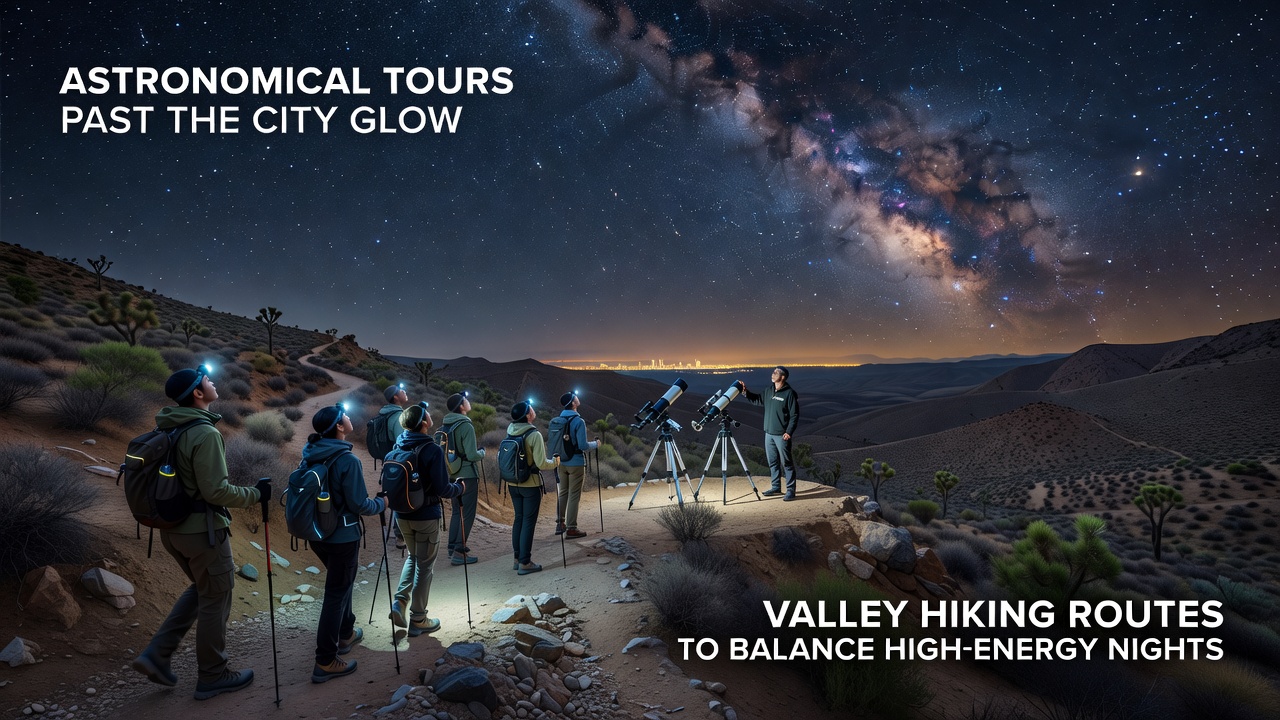
Trailhead parking data collected by the U.S. Forest Service shows peak usage between 7 a.m. and 10 a.m., after which heat and crowds increase. Many operators coordinate packages that return stargazing participants to their hotels by 1 a.m. and then offer guided hikes departing at 6 a.m. the following morning, creating a 24-hour cycle that alternates high-energy observation with low-impact physical activity.
Coordination Between Night and Day Programs
Operators match astronomical tour groups with hiking itineraries by tracking participant fitness levels and sleep needs. Those who complete a three-hour stargazing session receive recommendations for moderate trails such as the Calico Tanks route rather than strenuous ascents. Hydration stations and shaded rest areas appear at regular intervals on these paths, while guides adjust pacing based on group energy after late nights.
Transportation schedules align with both activities, with the same shuttle services dropping hikers at trailheads after breakfast and retrieving them before afternoon heat peaks. July 2026 itineraries include additional water resupply points because average daytime temperatures are projected to reach 102 degrees Fahrenheit according to National Weather Service long-range forecasts.
Equipment and Safety Protocols
Astronomical tours supply telescopes, binoculars, and star charts, while hiking groups distribute trail maps, trekking poles, and electrolyte packets. Both sets of providers follow protocols established by the Bureau of Land Management that require head counts, emergency beacons, and weather monitoring. Participants receive briefings on desert hazards including flash floods and wildlife encounters before each segment begins.
Studies published by the University of Nevada, Las Vegas, document that combined night-and-day packages reduce reported fatigue compared with consecutive late nights without daytime structure. Operators therefore maintain medical staff on call and require signed waivers covering both celestial observation and trail navigation.
Seasonal Availability and Registration Trends
Registration data from local tour companies reveal that combined astronomical and hiking packages book earlier during cooler months, with July 2026 availability opening six months in advance. Clear-sky percentages average 85 percent in summer according to National Oceanic and Atmospheric Administration records, yet operators monitor monsoon patterns that can cancel evening sessions. When tours run, participants often extend their stay to complete additional valley hikes the next day.
Conclusion
Astronomical tours beyond the city glow and valley hiking routes operate as complementary components that allow visitors to alternate intense nighttime viewing with daytime physical exploration. Coordinated schedules, shared transportation, and safety standards established by federal agencies support this pairing throughout the year, including during the July 2026 meteor shower window.